Penetrating the international market with our nation’s proud, spicy commodity has now become a highly lucrative business opportunity. Exporting chili from Indonesia actually involves a strict supply chain, starting from selecting premium seeds at the farmer level, hygienic cleaning in packaging facilities, to meticulous plant quarantine certifications. Every single stage moves quickly and measurably to ensure that the freshness of this ‘fiery red’ spice is perfectly preserved until it reaches the hands of global consumers. Entrepreneurs often ask how is chili exported smoothly, which requires mastering global quality standards, proper sorting, and choosing high-speed air freight for premium agricultural products.
Understanding Indonesia’s Chili Production and Export Potential
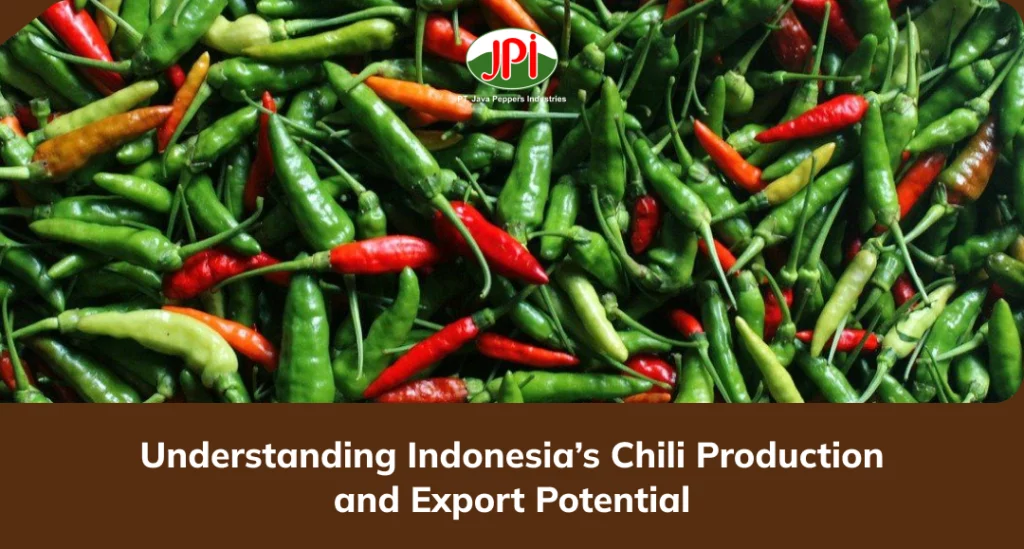
As a key ingredient in countless traditional dishes, chili plays a central role in the country’s culinary culture and food industry. Beyond domestic consumption, chili also offers significant economic value and has strong potential as an export commodity. Supported by a tropical climate and extensive agricultural land, Indonesia is well-positioned to expand its chili production and strengthen its presence in international markets.
The high domestic demand for chili ensures a consistently active market. In addition to being sold fresh, chili can be processed into a variety of value-added products, including chili sauce, chili powder, packaged sambal, and seasoning blends.
The growth of food processing industries has further increased demand for chili production. As a result, the chili supply chain supports not only farmers but also manufacturers, distributors, and retailers throughout the country.
Several factors contribute to Indonesia’s strong chili production capacity:
- Extensive agricultural land resources.
- Favorable tropical climate year-round.
- Experienced farmers with strong cultivation knowledge.
- Stable domestic demand.
- Growing adoption of modern agricultural technology.
Indonesia has a strong opportunity to capitalize on this growing demand. In addition to exporting fresh chili, the country can expand exports of processed products that offer longer shelf life and higher market value.
- Fresh chili peppers.
- Dried chili.
- Chili powder.
- Packaged sambal.
- Chili sauces.
- Chili extracts for food processing industries.
Understanding Indonesia’s chili production and export potential reveals that chili is far more than just a common kitchen ingredient. It is a strategic agricultural commodity capable of supporting economic growth, improving farmer livelihoods, and enhancing Indonesia’s reputation as a leading producer of high-quality chili products. With the right strategies and long-term commitment, Indonesia can transform its chili industry into a powerful contributor to global agricultural trade.
How Indonesian Chilies Are Processed and Prepared for International Markets
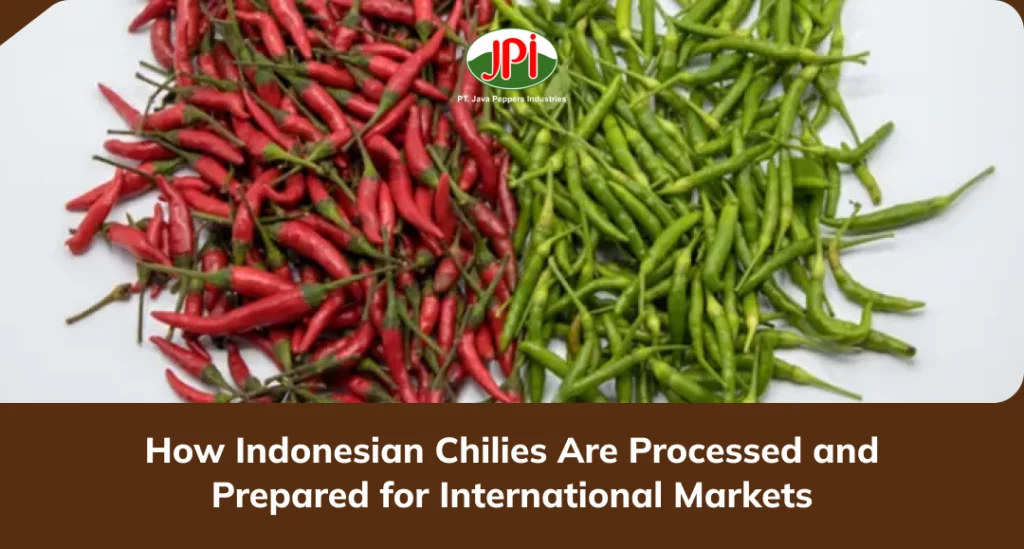
Harvesting is usually done manually to minimize damage to the fruit. Workers carefully pick the chilies and place them in clean containers to avoid bruising. Proper harvesting techniques are essential because damaged chilies can spoil quickly and reduce the overall quality of export shipments.
Timing also plays a crucial role. Farmers generally harvest chilies during cooler parts of the day, such as early morning, to preserve freshness and maintain product quality throughout the supply chain.
- Sorting and Grading for Export Quality
- Cleaning and Sanitizing the Product
- Post-Harvest Handling and Cooling
Packaging According to International Standards
Processed products such as chili powder and sauces are packaged in sealed containers designed to preserve freshness and extend shelf life. Labels must also comply with the regulations of destination countries, including information about ingredients, origin, production dates, and food safety certifications.
Meeting International Food Safety Requirements
Documentation allows buyers to verify the origin and handling of products throughout the supply chain.
Regular inspections, laboratory testing, and quality audits help ensure that exported chilies meet the standards required by importing countries. This commitment to quality strengthens Indonesia’s competitiveness in the global marketplace.
Transportation and Export Logistics
Exporters work closely with logistics providers, customs authorities, and international distributors to ensure smooth delivery. Accurate documentation and proper handling reduce delays and help products reach their destinations in excellent condition.
The Export Journey: From Local Farms to Global Consumers
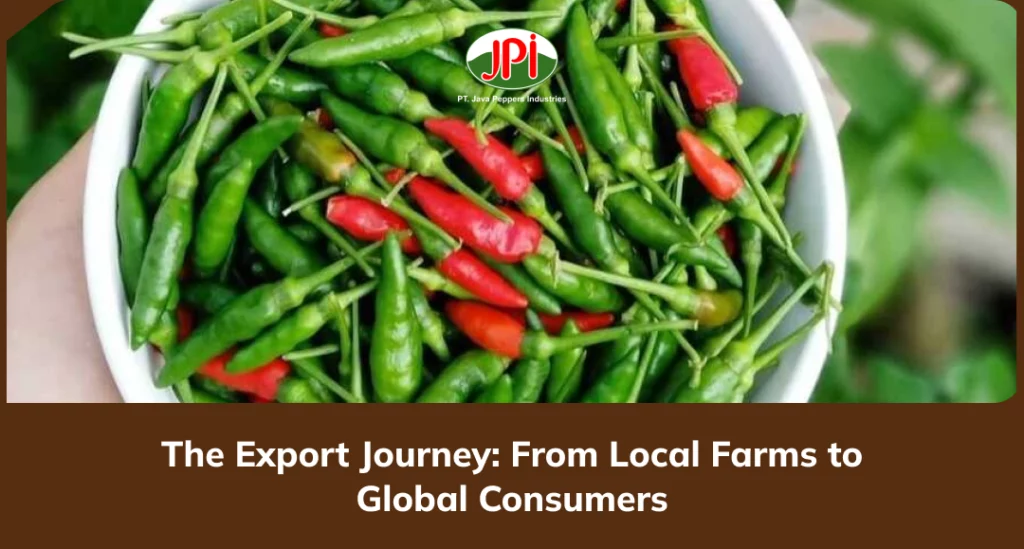
International buyers often require consistency in size, color, taste, and freshness. As a result, farmers must focus on maintaining high standards throughout the growing season. Many farmers also adopt sustainable farming methods to meet the increasing demand for environmentally friendly products.
In addition, collaboration between farmers, cooperatives, and export companies helps ensure a steady supply of products throughout the year. This consistency is essential for maintaining long-term relationships with overseas buyers.
Harvesting and Sorting for Export Standards
Sorting ensures that international customers receive products with uniform quality. This attention to detail helps exporters build trust with importers and strengthens their reputation in global markets.
Products that do not meet export standards are often sold domestically or processed into value-added products, reducing waste and maximizing profitability.
Technology Drives Modern Export Growth
These innovations make it easier for local farms to compete in the global marketplace. As technology continues to evolve, the export journey becomes faster, more efficient, and more reliable for all stakeholders involved.
Packaging Protects Products During Transportation
Fresh fruits and vegetables may be packed in ventilated cartons, while processed products often require sealed packaging that extends shelf life.
Modern packaging also includes important product information such as country of origin, production date, batch number, certifications, and handling instructions. These details help meet international regulations and improve traceability throughout the supply chain.
Customs Clearance and Market Entry
If everything meets the required standards, the products are cleared for distribution. This stage is crucial because any discrepancies in documentation or quality can result in delays, additional costs, or even shipment rejection.
Experienced exporters invest significant effort in preparing accurate documentation and maintaining quality standards to avoid complications during customs clearance.
Conclusion
Indonesia possesses an incredibly massive chili production and export potential to compete in the global market. Through hygienic processing and preparation that meet international standards, this spicy commodity safely penetrates worldwide markets. The integrated export journey from local farms to global consumers proves that the quality of Indonesian chilies is now increasingly recognized worldwide.