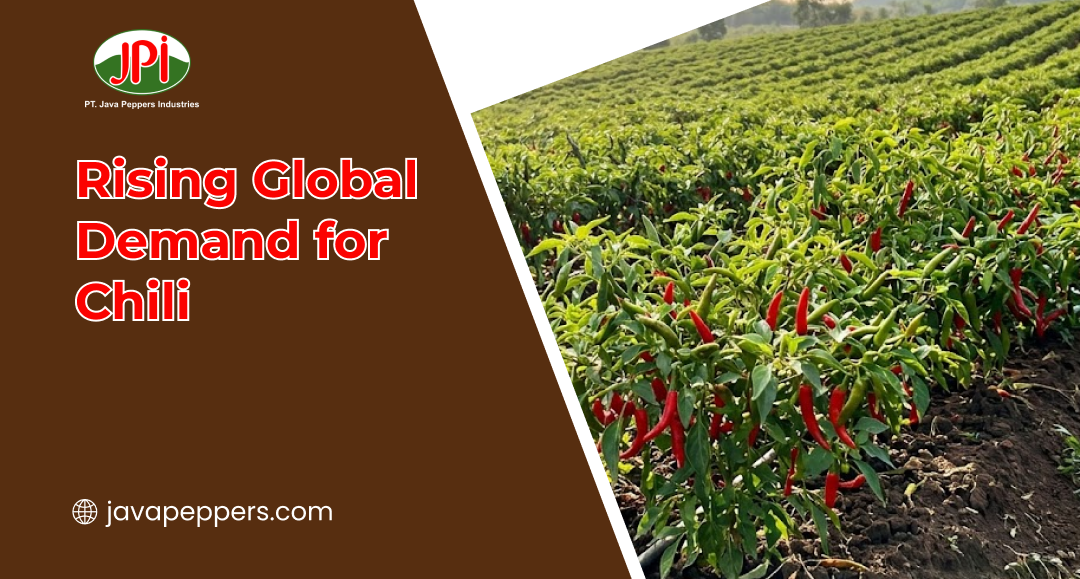
Chili global demand – Chili global demand is heating up, yet supply struggles to keep pace. A trade update says India, the top dried chilli exporter, has a smaller crop this season, which cuts exportable supply in late 2026.
Meanwhile, one market report values the chili pepper market at about 11.56 billion dollars in 2026. So, buyers, sellers, and curious readers all want to know what drives this boom. Next, this guide explains why demand grows, who buys, and where exporters can win.
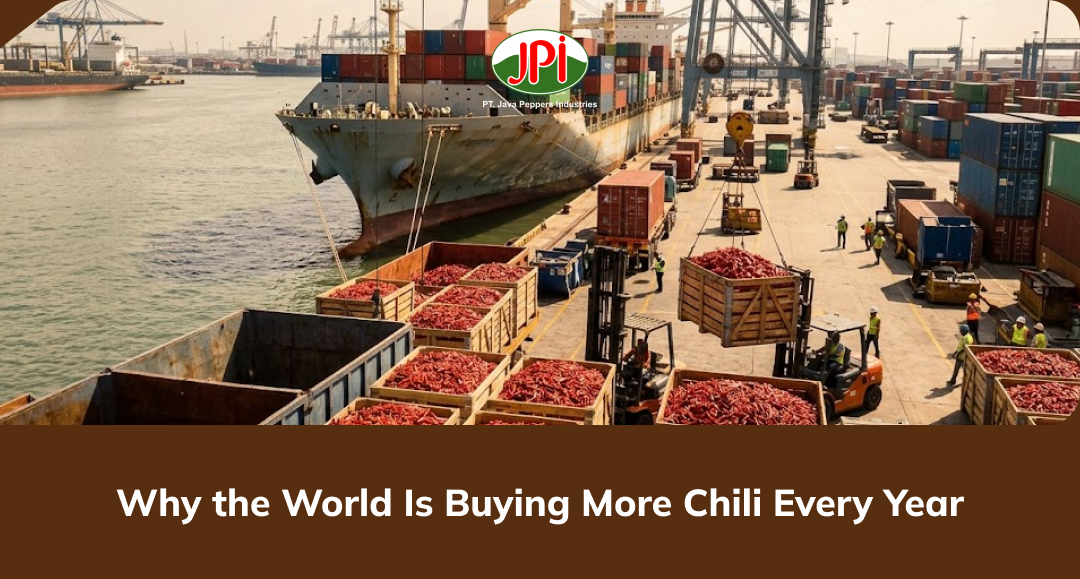
Why the World Is Buying More Chili Every Year
why_the_world_is_buying_more_chili_every_year
Spicy Food Is Becoming Popular Worldwide
Spicy food is no longer limited to Asia and Latin America. Consumers in the United States, for example, are increasingly enjoying Mexican, Indian, and other Asian cuisines. This growing interest encourages restaurants and home cooks to purchase more chili peppers. As a result, changing food preferences continue to support global chili demand.
Growing Demand for Chili Sauces and Processed Foods
Chili peppers are also important ingredients in many popular sauces and pastes. Products such as sriracha, gochujang, harissa, and hot sauce rely on chili for their distinctive flavor. Food manufacturers also use chili to create spicy snacks and ready-to-eat products.
The Global Chili Market Continues to Grow
The global chili market is expected to experience steady growth in the coming years. One market report forecasts an annual growth rate of around 6.6 percent through 2032. Another research firm estimates growth at approximately 5.9 percent. Although the projections differ, both indicate increasing demand for chili products worldwide.
Chili Has Uses Beyond the Food Industry
Chili peppers are not only used in cooking and food production. Capsaicin, the compound responsible for chili’s heat, is also used in pharmaceutical and cosmetic products. Red chili can also provide natural color to certain food products.
Supply Challenges Affect Global Chili Prices
Despite growing demand, chili supplies can face several challenges. For example, a smaller harvest in India may reduce the amount of chili available for export in late 2026. Meanwhile, Indonesia’s trade minister has linked higher chili prices to dry-season heat.
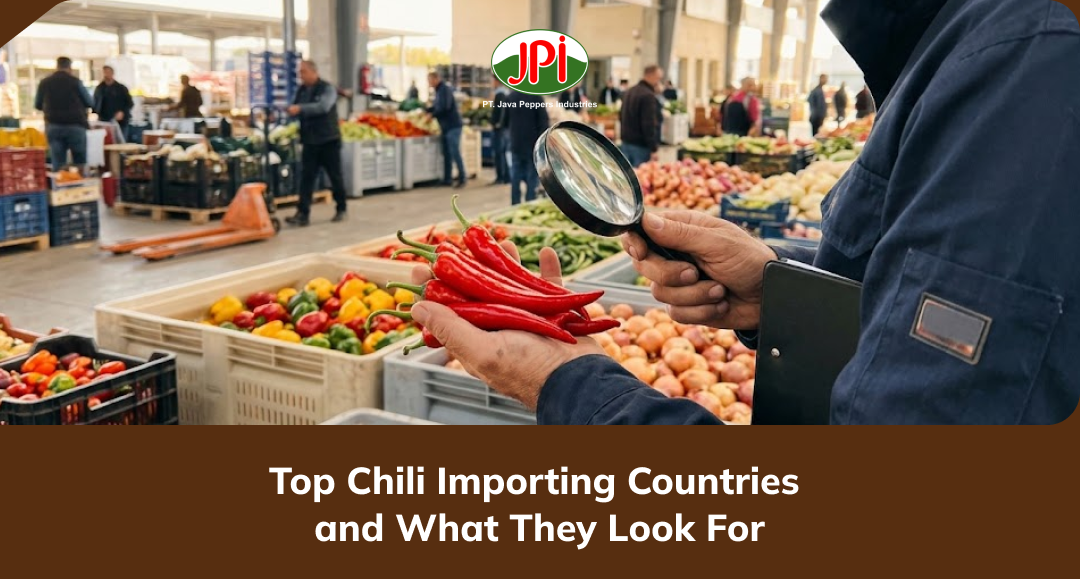
Top Chili Importing Countries and What They Look For
top_chili_importing_countries_and_what_they_look_for
United States
The United States is one of the largest importers of dried whole chili peppers. In 2023, it accounted for approximately 30 percent of global import value in this category. However, exporters must meet strict food safety requirements before entering the market. US regulations set an aflatoxin limit of 20 micrograms per kilogram for food, making proper testing essential.
Germany and Other European Markets
Germany is another major importer of dried chili, followed by countries such as the United Kingdom, France, and Canada. European buyers also follow strict food safety standards. For example, EU regulations set a maximum total aflatoxin level of 10 micrograms per kilogram for spices and a lead limit of 0.9 mg per kilogram for dried chili peppers.
Strict Pesticide Residue Checks
The European Union and China also enforce strict limits on pesticide residues in imported chili products. The EU, for instance, has required additional testing for 20 percent of certain Indian dried chili shipments. Products that fail inspections may be rejected or returned to the exporting country.
Thailand and Southeast Asian Markets
Thailand is another major chili importer, with India serving as one of its main suppliers. In 2024, Thailand imported approximately 86 million kilograms of chili worth around 200 million dollars. Thailand also supplies chili to neighboring countries, including Malaysia.
Gulf Countries and Other Import Markets
Gulf countries also offer opportunities for chili exporters. In 2023, the United Arab Emirates received more than half of Sri Lanka’s dried whole chili exports. Other important destinations for Thai chili include Japan, Russia, and Saudi Arabia.
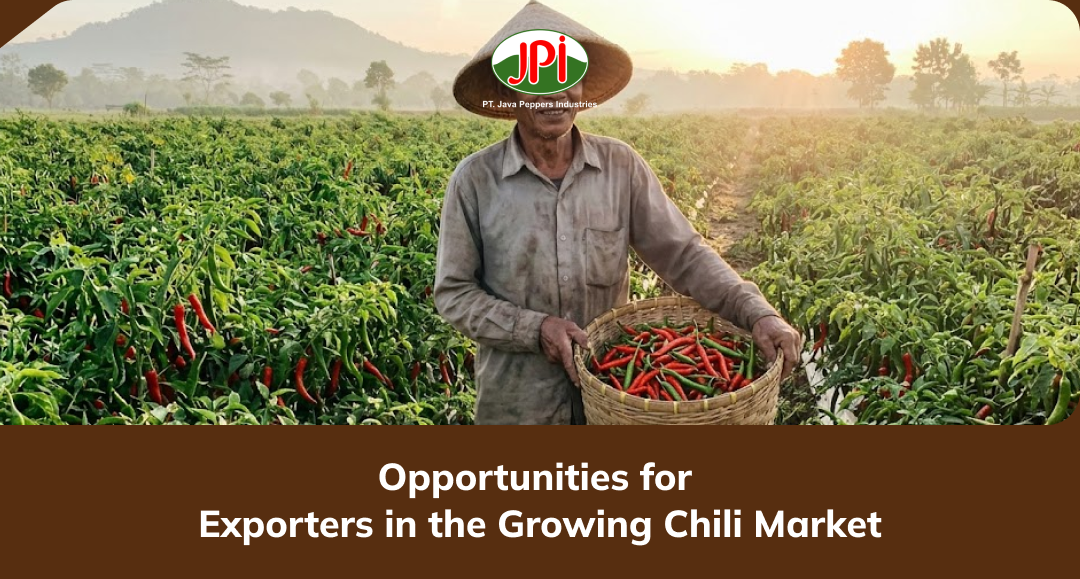
Opportunities for Exporters in the Growing Chili Market
opportunities_for_exporters_in_the_growing_chili_market
Meeting Supply Gaps in International Markets
A smaller chili harvest in major producing countries can create opportunities for alternative suppliers. International buyers often look for additional sources to reduce their dependence on a single country. Laos, for example, is increasingly positioning chili as an export commodity while market prices remain firm.
Selling Value-Added Chili Products
Exporters can also increase product value by processing chili into powder, flakes, and sauces. Chili powder, for example, is traded across 166 countries, showing the wide reach of processed chili products. These products can offer better profit opportunities than selling fresh or dried whole chili alone.
Meeting International Food Safety Standards
Food safety compliance is essential for exporters who want to reach premium international buyers. One industry guide recommends keeping chili moisture content below 12 percent to help prevent mold growth. Exporters should also conduct pesticide residue and aflatoxin tests before shipping. Proper quality control can reduce the risk of rejected shipments and financial losses.
Expanding into Multiple Export Markets
Relying on a single export destination can expose businesses to market changes and declining demand. Exporters can reduce this risk by targeting several regions, including the United States, Europe, the Gulf, and Asia. A broader customer base provides more flexibility when prices or import demand change.
Managing Price and Supply Risks
The international chili market can be affected by tariffs, weather conditions, and changes in agricultural production. Recent trade policy developments in the United States, for example, have influenced chili pricing and market conditions. Exporters should use clear contracts that specify prices, product quality, and delivery terms.

Conclusion
Global chili demand continues to grow as spicy food becomes more popular and manufacturers expand their use of chili in sauces, snacks, and other products. However, supply shortages, changing prices, and strict import regulations remain important challenges for exporters.