Indonesia sits at the heart of the global spice trade, and its agricultural sector continues to impress the world. The Indonesian red pepper export industry holds enormous untapped potential that farmers, traders, and investors should not ignore. Red pepper from Indonesia offers exceptional quality, vibrant color, and bold flavor that international buyers actively seek. Moreover, rising global demand for natural spices makes this the perfect time to explore export opportunities more seriously. So, whether you are a farmer, exporter, or business owner, this guide gives you the insights you need to move forward confidently.
Indonesia’s Red Pepper Production & Global Demand
Indonesia ranks among the world’s top pepper-producing countries alongside Vietnam, Brazil, and India. The country grows both black and red pepper, with Lampung in Sumatra standing out as the most productive region. Additionally, regions like Bangka Belitung, West Kalimantan, and Sulawesi also contribute significant volumes to national output. This geographic spread gives Indonesia a strong and reliable production base for meeting international demand year-round.
Red Pepper Varieties Grown in Indonesia
Indonesian farmers grow several red pepper varieties that appeal to different international markets. The Lampung variety earns recognition for its bold aroma and high piperine content, which buyers associate with premium quality. Furthermore, farmers also cultivate red chili peppers separately, adding diversity to the overall export product range. This variety of offerings lets Indonesian exporters serve multiple market segments simultaneously with competitive products.
Annual Production Volume and Growth Trends
Indonesia produces hundreds of thousands of tons of pepper annually, with red pepper making up a significant share. Production volumes have trended upward over the past decade as more farmers adopt better cultivation techniques. Also, government support programs have helped farmers increase yield per hectare through improved seeds and fertilizers. This consistent growth in production volume strengthens Indonesia’s position as a dependable long-term supplier to global buyers.
Rising Global Demand for Natural Spices
Consumers worldwide increasingly prefer natural spices over artificial flavor enhancers in their food and beverages. This shift in consumer behavior drives strong and growing demand for authentic red pepper from trusted origins. Moreover, the food processing, restaurant, and pharmaceutical industries all rely heavily on high-quality red pepper as a core ingredient. Indonesian exporters who position their products well can capture a significant share of this expanding global market.
Price Competitiveness in the Global Market
Indonesian red pepper consistently offers competitive pricing compared to some rival producing countries. Lower production costs, combined with favorable growing conditions, allow Indonesian suppliers to offer attractive prices to buyers. Furthermore, maintaining price competitiveness while delivering consistent quality gives Indonesian exporters a powerful edge in negotiations. Buyers from price-sensitive markets particularly appreciate what Indonesia brings to the table in terms of value.
Key Export Markets & Trade Routes
Knowing where the demand exists and how products reach those destinations is critical for any successful export strategy. Here are five key export markets and trade considerations that every Indonesian red pepper exporter should understand clearly.
China as the Largest Buyer
China consistently ranks as one of the largest importers of Indonesian red pepper in the global market. Its massive food processing industry, restaurant sector, and traditional medicine market all create enormous appetite for quality red pepper. Additionally, geographic proximity between Indonesia and China keeps shipping costs relatively low compared to other destinations. Building strong relationships with Chinese importers gives Indonesian exporters access to one of the most lucrative spice markets in Asia.
India’s Growing Import Appetite
India, despite being a major pepper producer itself, imports red pepper varieties that complement its domestic supply. Indonesian red pepper appeals to Indian buyers looking for specific flavor profiles and color intensity at competitive prices. Moreover, India’s expanding food manufacturing sector continues to increase its demand for imported spice ingredients year after year. Tapping into the Indian market requires understanding local quality standards and building trust through consistent product delivery.
The United States and European Union Markets
The US and EU represent high-value markets where buyers prioritize quality, traceability, and food safety certifications above all else. American spice companies and European food manufacturers actively seek premium red pepper with verified origins and clean processing standards. Furthermore, these markets offer higher profit margins for exporters who meet their strict regulatory and documentation requirements. Indonesian exporters who invest in proper certification and compliance will find these Western markets highly rewarding.
Middle Eastern Demand for Spices
Middle Eastern countries including Saudi Arabia, UAE, and Egypt import large quantities of red pepper for their vibrant food cultures. Local cuisines in this region rely heavily on bold spices, making red pepper a daily kitchen essential for millions of households. Also, the growing restaurant industry and food service sector across the Gulf region amplify import demand significantly every year. Indonesian exporters who establish direct partnerships with Middle Eastern distributors can secure steady and profitable long-term contracts.
Major Shipping Routes and Logistics Hubs
Indonesia exports red pepper through several key ports, with Tanjung Priok in Jakarta and Panjang Port in Lampung handling the highest volumes. Most shipments travel via established sea freight routes that connect Indonesia to Asia, the Middle East, Europe, and the Americas. Additionally, using regional logistics hubs like Singapore helps Indonesian exporters manage transshipments more efficiently and cost-effectively. Smart logistics planning directly impacts delivery speed, product freshness, and overall customer satisfaction in every target market.
Challenges & Strategies to Boost Export Potential
Every export opportunity comes with real challenges that require smart, proactive strategies to overcome effectively. Here are five major hurdles Indonesian red pepper exporters face and the practical approaches that can turn those challenges into advantages.
Meeting International Quality and Safety Standards
Many target markets require exporters to comply with strict food safety regulations such as HACCP, ISO, and specific pesticide residue limits. Indonesian farmers and processors sometimes struggle to meet these standards due to limited resources and training. However, partnering with certified processing facilities and investing in proper quality control systems can solve this problem effectively. Exporters who consistently deliver certified, traceable products earn buyer trust faster and command better prices in premium markets.
Price Volatility in the Global Spice Market
Red pepper prices fluctuate significantly due to weather events, currency movements, and shifts in global supply and demand. This volatility makes financial planning difficult for small and medium-sized Indonesian exporters operating on tight margins. Nevertheless, forward contracts and price hedging strategies help exporters lock in favorable rates and protect their profitability. Building a diverse customer base across multiple markets also reduces dependence on any single buyer and cushions against sudden price drops.
Lack of Branding and Market Positioning
Many Indonesian red pepper exporters sell as generic commodity suppliers without a strong brand identity or story behind their products. This approach limits their ability to command premium prices or build loyal, long-term buyer relationships in competitive markets. Fortunately, developing a clear brand around Indonesian origin, sustainable farming, and superior quality can differentiate exporters powerfully. Storytelling about the product’s origin and farming practices resonates strongly with modern buyers in Europe, the US, and Japan.
Infrastructure and Post-Harvest Handling Gaps
Poor post-harvest handling, inadequate storage facilities, and unreliable rural logistics still affect product quality in some growing regions. These infrastructure gaps lead to quality inconsistencies that frustrate international buyers and damage Indonesia’s reputation over time. However, investing in proper drying equipment, moisture-controlled storage, and better farm-to-port logistics significantly reduces quality loss. Government and private sector collaboration on rural infrastructure improvements will accelerate progress in addressing these longstanding challenges.
Digital Tools and E-Commerce for Export Growth
Modern exporters now use digital platforms, B2B marketplaces, and social media to connect directly with international buyers worldwide. Indonesian red pepper exporters who embrace platforms like Alibaba, Global Sources, and industry-specific trade portals gain access to thousands of qualified leads. Moreover, digital marketing helps Indonesian suppliers tell their story, showcase certifications, and build credibility before the first meeting even happens. Adopting these digital tools gives smaller Indonesian exporters the reach that previously only large trading companies could afford.
Monsera Chili Sauce, A Typical Indonesian Spicy Flavor
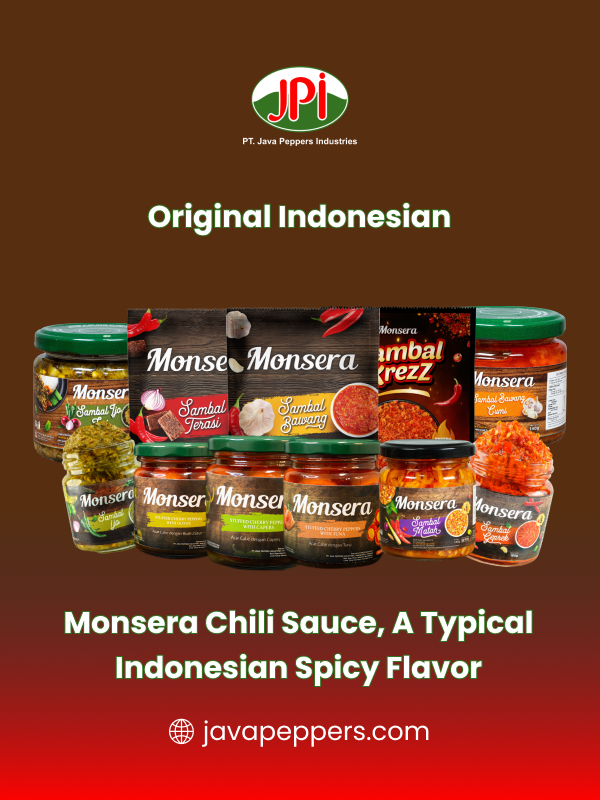
Indonesia is famous for its rich culinary heritage and spicy food culture. Monsera Chili Sauce represents one of the authentic Indonesian spicy flavors made from selected chili peppers and natural ingredients. The sauce combines spicy, savory, and slightly sweet flavors that complement various dishes such as fried rice, noodles, seafood, grilled chicken, and traditional snacks.
Its authentic taste reflects Indonesia’s diverse food traditions and appeals to consumers seeking bold Asian flavors. With increasing global interest in Indonesian cuisine, Monsera Chili Sauce has strong potential in international markets, especially among buyers looking for unique and premium spicy condiments from Southeast Asia.
Let’s order via the button below now!

Conclusion
Indonesian red pepper export opportunities have never looked more promising than they do right now. Strong production capacity, diverse export markets, and rising global demand for natural spices all point toward a bright future for Indonesian suppliers.