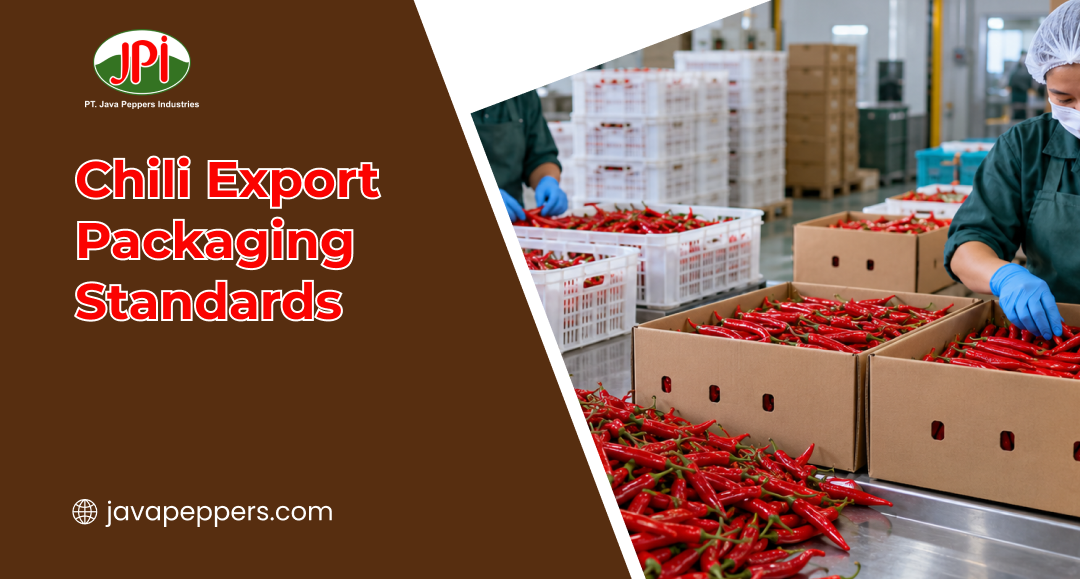
Chili Export Packaging – Here is a wake-up call for chili exporters. Dominican fresh chili exports fell 29% in 2025, and the EU market dropped the hardest. Meanwhile, EU rules require port testing for pesticide residue on half of those shipments. So, solid chili export packaging, paperwork, and labels matter more than ever. This guide shows you how to get them right.
Packaging Requirements for Exporting Fresh, Dried, and Paste Chili
packaging_requirements_for_exporting_fresh_dried_and_paste_chili
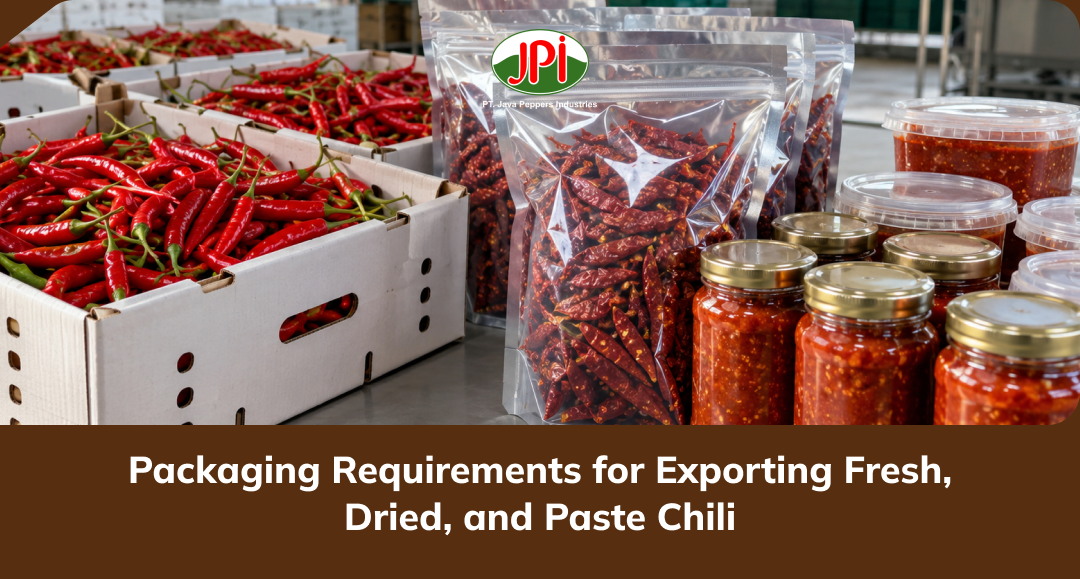
Ventilated cartons for fresh chilies
Fresh chilies need packaging that protects them from physical damage while allowing proper airflow. Use sturdy, food-safe cartons with ventilation holes to help manage heat and moisture during transport. Suitable liners or dividers can reduce friction and bruising between pods. Choose packaging designed for the expected shipping duration and storage conditions.
Moisture-proof bags for dried chilies
Dried chilies can absorb moisture from the surrounding air, increasing the risk of mold and quality loss. Use food-grade bags with suitable moisture barriers to maintain product quality. An outer woven sack or sturdy carton can provide additional protection during handling and transport. Make sure the packaging is sealed properly before shipment.
Airtight jars and pouches for chili paste
Chili paste requires packaging that prevents leakage and protects the product from contamination. Glass jars, suitable plastic containers, and retort pouches can work, depending on the product formulation and processing method. Use secure closures and tamper-evident seals where appropriate. For shelf-stable products, ensure the packaging and heat-processing method have been validated for food safety.
Food-contact safety
Every material that directly touches the chilies must be suitable for food contact. Ask packaging suppliers for relevant compliance documents and specifications. Avoid materials that may transfer harmful substances, odors, or ink residues to the product. Meeting the destination country’s food-contact requirements helps reduce the risk of shipment rejection.
Pallets and container loading
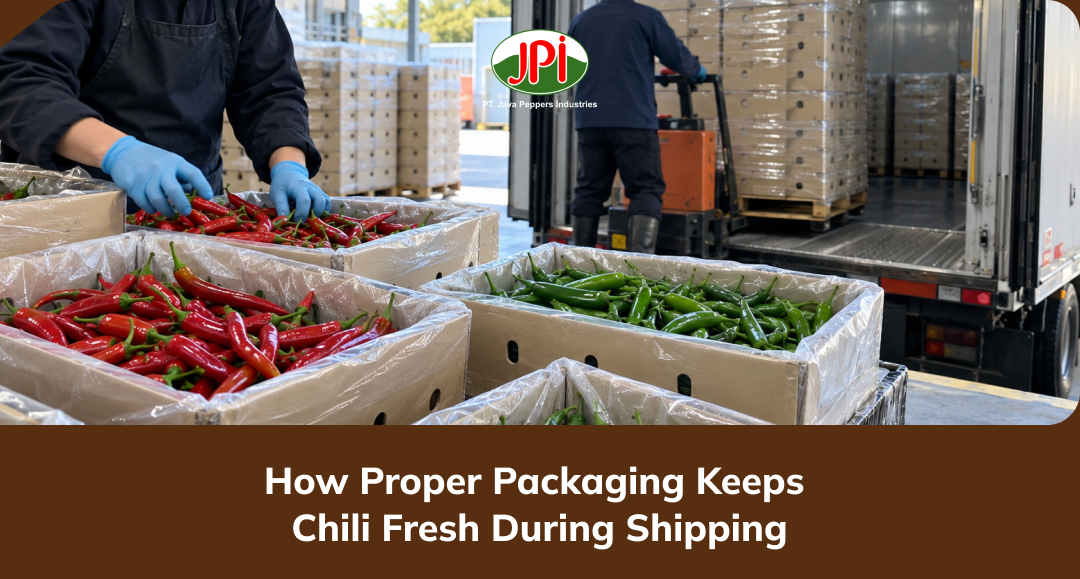
Use clean, suitable pallets and secure cartons to reduce movement during transport. Corner protectors and stretch wrap can help stabilize loads, but avoid blocking ventilation when shipping fresh chilies. Keep cartons away from direct contact with dirty container floors and walls. Check the container’s cleanliness, temperature suitability, and condition before loading.
How Proper Packaging Keeps Chili Fresh During Shipping
how_proper_packaging_keeps_chili_fresh_during_shipping
Cold chain support
Fresh chilies are perishable, so suitable temperature management helps slow deterioration during transport. The ideal temperature depends on the chili variety, maturity, and shipping duration. Temperatures that are too low can cause chilling injury in some varieties. Coordinate storage and transport conditions with the exporter, importer, and logistics provider.
Moisture balance
Excess moisture inside fresh-chili packaging can encourage decay, while excessive moisture loss causes shriveling. Select liners and ventilation based on the product’s cooling and humidity requirements. For dried chilies, moisture-barrier packaging helps prevent reabsorption of water. Desiccants should only be used when appropriate for the product and packaging system.
Modified atmosphere and vacuum packaging
Modified-atmosphere packaging can help extend the quality life of some fresh or processed chili products when properly designed. The gas mixture and packaging permeability must match the product’s respiration rate and storage conditions. Vacuum packaging may suit certain dried or processed products, but it is not automatically appropriate for fresh chilies. Packaging alone cannot replace proper temperature control and food-safety procedures.
Cushioning against rough handling
Chilies can be bruised or crushed by vibration, stacking pressure, and rough handling. Use dividers, suitable liners, and strong cartons to reduce movement and impact. Stack cartons according to their strength and avoid excessive loads that could crush the products below. Careful handling during loading and unloading also helps maintain quality.
Protection against pests and contamination
Clean packaging and storage areas help reduce exposure to insects, dust, and other contaminants. Inspect products and packaging before sealing and loading. Any pest treatment must follow applicable regulations and be suitable for the product. Check the destination country’s import requirements because phytosanitary measures differ by product and origin.
Labeling and Certification Tips for Chili Exporters
labeling_and_certification_tips_for_chili_exporters
Essential label details
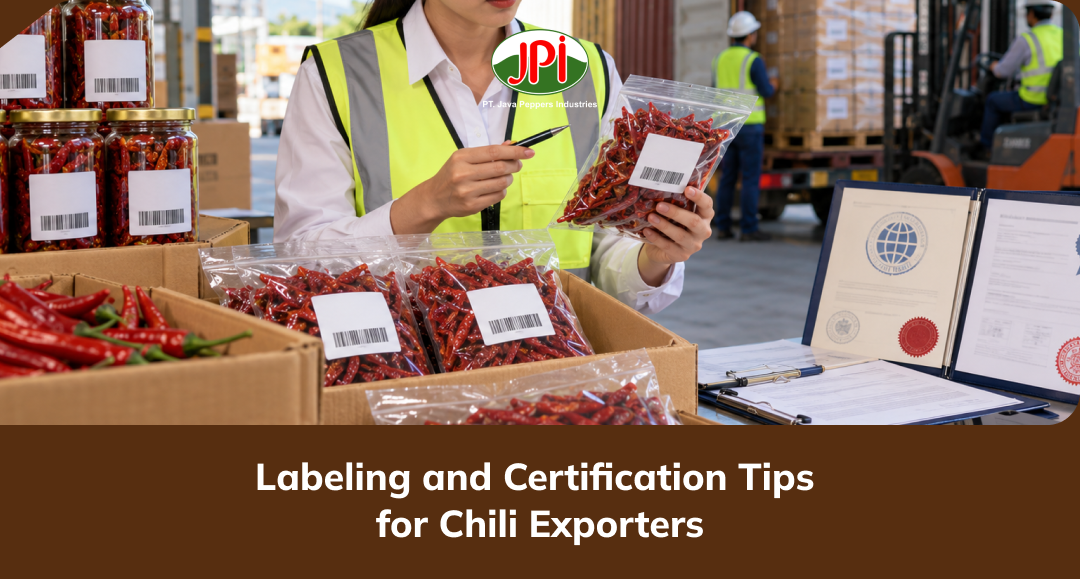
Labels should identify the product and provide the information required by the destination market. Depending on the product type, this may include net weight, country of origin, lot number, packing date, expiry or best-before date, and storage instructions. Processed chili products may also require ingredient lists and nutritional information. Consistent lot identification helps buyers trace products if a quality issue occurs.
Testing and laboratory reports
Chili exports may be subject to testing for pesticide residues, microbial contamination, mycotoxins, or other hazards, depending on the product and destination. Arrange testing through a qualified laboratory using methods appropriate to the shipment. Review the applicable limits and testing requirements before dispatch. Keep laboratory reports and supporting documents available for the importer and inspection authorities.
Farm-level certifications
Certifications can help demonstrate that a business follows recognized agricultural, food-safety, or quality-management practices. Depending on the buyer, relevant schemes may include GLOBALG.A.P., HACCP-based systems, or IFS. A phytosanitary certificate may also be required for certain fresh or dried plant products.
Read More : How to Test Chili Heat Levels
Let’s order via the button below now!

Conclusion
Successful chili exports depend on packaging that matches the product, protects quality, and meets food-safety requirements. Fresh chilies need suitable ventilation and temperature control, dried chilies need effective moisture protection, and chili paste requires packaging appropriate to its processing method.