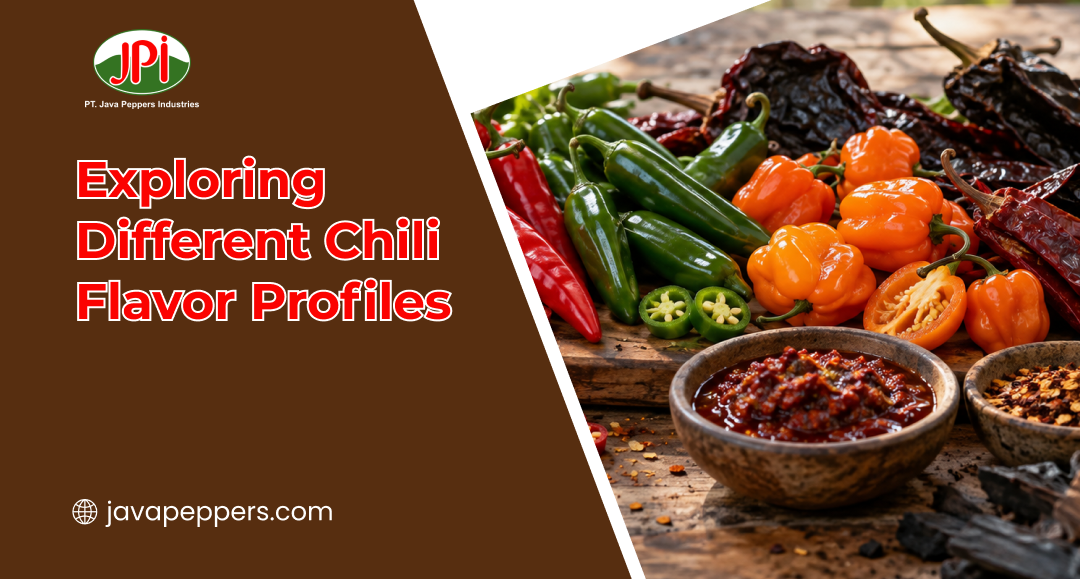
Chili Flavor Profiles – Most people think chili is just about heat. The hotter, the better. But professional chefs, food scientists, and spice buyers know the truth: heat is only one small piece of a much bigger picture.
Chili flavor profiles are complex, layered, and incredibly diverse. A bird’s eye chili from Java tastes nothing like a smoky chipotle from Mexico or a fruity habanero from the Caribbean. Each variety carries its own personality, and understanding those differences can completely transform how you cook, develop products, or source ingredients.
This article dives deep into what makes each chili taste the way it does, why it matters for food and business, and how to match the right variety to the right application.
What Makes a Chili Flavor Profile Unique?
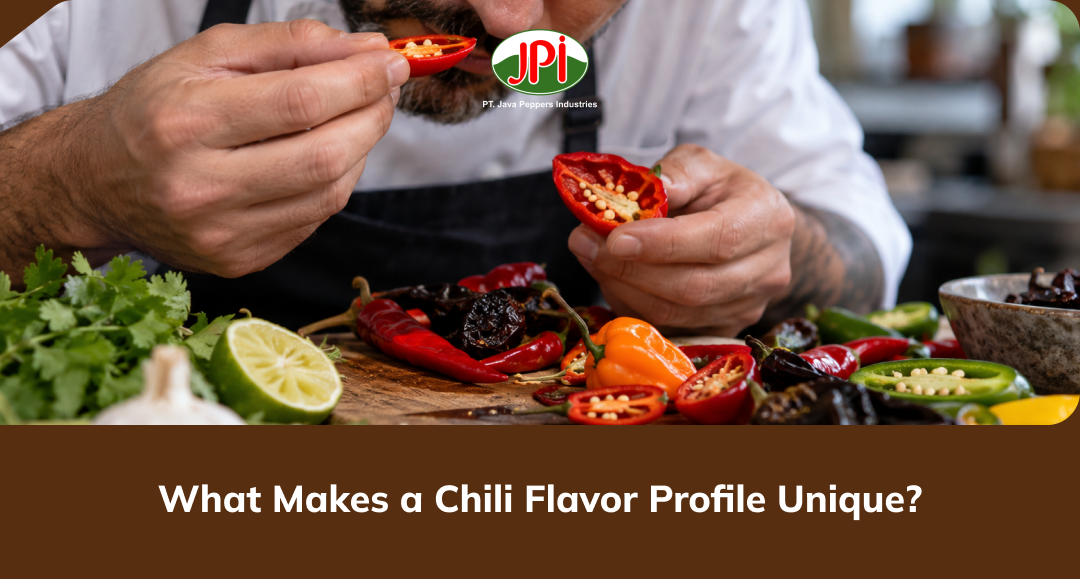
Before comparing varieties, it helps to understand what actually creates flavor in chili.
The Role of Capsaicinoids
Capsaicin is the compound responsible for the burning sensation you feel when eating chili. But capsaicin alone does not explain flavor. Different chili varieties contain different ratios of capsaicinoids, including dihydrocapsaicin, nordihydrocapsaicin, and others. These compounds create subtle differences in how heat builds, where you feel it in your mouth, and how long it lingers.
Bird’s eye chili delivers a sharp, immediate hit that peaks quickly. Habanero heat builds more slowly but spreads wider and lasts much longer. Same spice family, completely different experience.
Volatile Compounds and Aroma
Beyond capsaicin, chili contains hundreds of volatile aromatic compounds that define its smell and taste. These include fruity esters, earthy terpenes, and green grassy notes depending on variety and ripeness.
Freshly picked green chili smells herbal and bright. The same chili left to ripen to red develops a sweeter, more complex aroma. Drying it further concentrates those aromatics into something deeper and more intense.
Sugar Content and Sweetness
Many people overlook the natural sweetness in chili. Varieties like the large red chili (cabai merah besar) from Indonesia carry significant sugar content alongside their heat. This sweetness balances the spice and creates a more rounded flavor that works beautifully in sauces and marinades. Lower sugar varieties deliver a cleaner, sharper heat without the sweetness softening the blow.
Exploring Chili Flavor Profiles by Variety
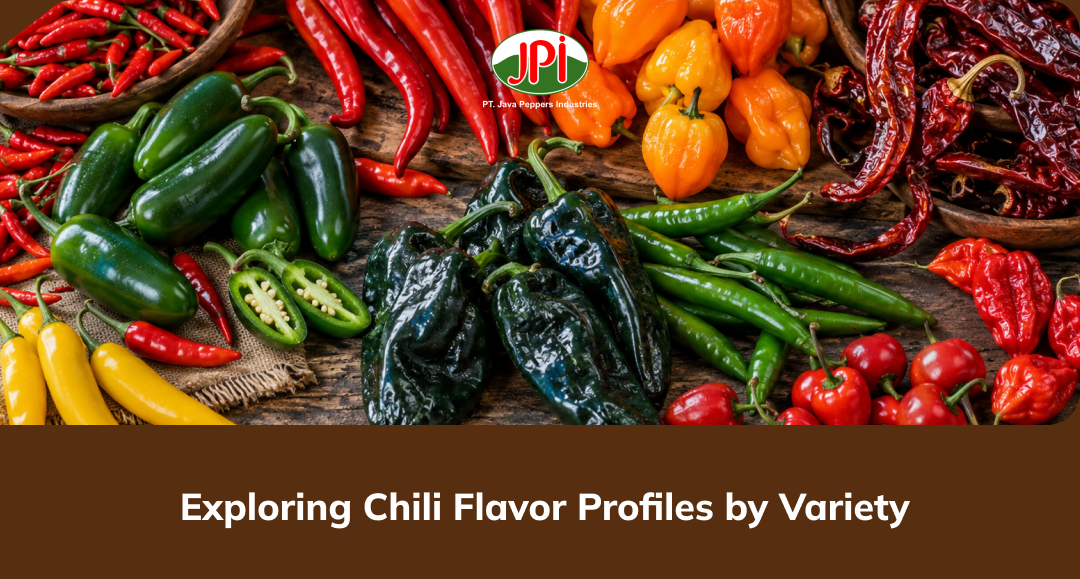
Indonesian Bird’s Eye Chili (Cabai Rawit)
This is the workhorse of Southeast Asian cooking. Small, potent, and assertive. The flavor profile is sharp and clean with a grassy, slightly citrusy note upfront. Heat arrives fast, peaks hard, and fades within a few minutes.
There is almost no sweetness to speak of, which is exactly what makes it so effective in dishes that need pure, uncompromised heat. Scoville range: 50,000 to 100,000 SHU. Best for: sambal, chili oil, hot sauces, spice blends, and any application where clean heat is the priority.
Indonesian Cayenne Chili (Cabai Merah Keriting)
This is a longer, thinner variety with a slightly more complex personality. The heat is moderate and builds gradually rather than hitting all at once.
The flavor carries earthy undertones with a mild sweetness underneath the spice. It dries beautifully and retains its deep red color, which makes it extremely popular for chili powder, paprika blends, and dried spice manufacturing. Best for: dried chili products, spice blends, chili flakes, curry bases, and food manufacturing applications.
Indonesian Large Red Chili (Cabai Merah Besar)
Mild, fleshy, and genuinely sweet. This variety prioritizes flavor over fire. The profile is fruity and rich with a soft warmth rather than aggressive heat. It adds body and color to dishes without overwhelming the other ingredients.
This makes it extremely versatile for both fresh and processed food applications. Best for: fresh use, pickling, sauces, stuffed chili dishes, food service presentations, and products targeting heat-sensitive consumers.
Jalapeño
One of the most recognized chili varieties globally. The jalapeño is mild to medium in heat with a distinctly vegetal, slightly grassy flavor profile that many consumers find approachable and familiar.
When smoked and dried, it becomes a chipotle, which develops a rich, woody, slightly sweet smokiness that adds incredible depth to barbecue sauces, marinades, and dips. Best for: fresh salsas, pickled products, pizza toppings, smoked sauces, and products targeting mainstream Western consumers.
Habanero
This is where things get seriously interesting. Habanero carries intense heat paired with a genuinely fruity, almost tropical flavor that surprises people who expect pure fire.
The flavor profile includes notes of apricot, citrus, and floral sweetness before the intense heat takes over. This complexity makes habanero a favorite for premium hot sauce producers who want both heat and character in their products. Best for: premium hot sauces, fruit-based chili products, gourmet food pairings, and any product that wants to lead with flavor before heat.
Ancho and Mulato (Dried Poblano Varieties)
These dried Mexican varieties offer something completely different. The heat is low to moderate, but the flavor is extraordinarily rich. Ancho carries notes of dark chocolate, dried fruit, and mild earthiness. Mulato is darker and more complex with hints of coffee and licorice. Both are central to traditional mole sauces and add incredible depth to slow-cooked dishes.
How to Match Chili Flavor Profiles to Your Application
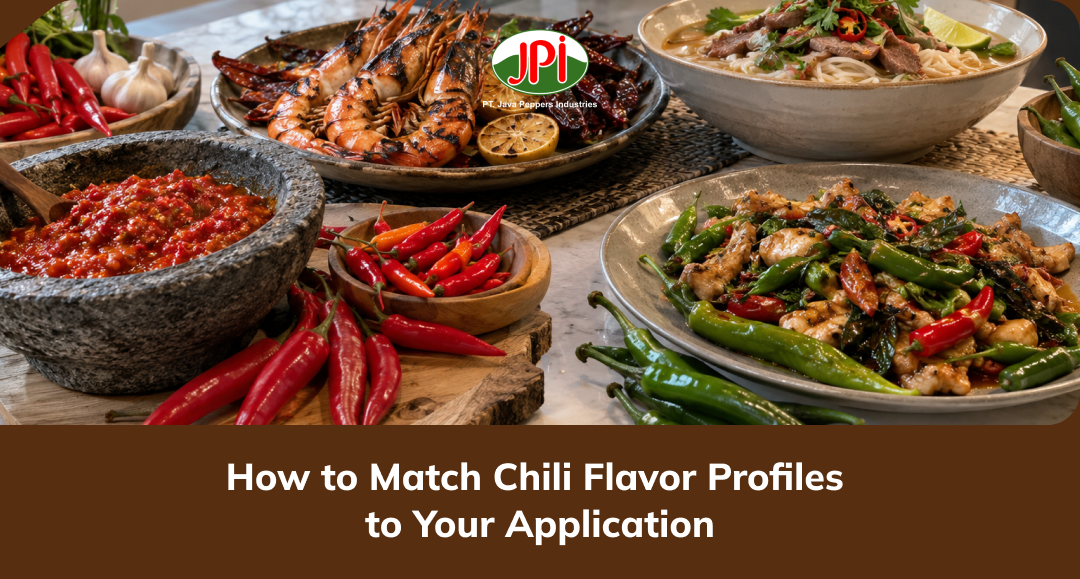
The best hot sauces are built on a flavor foundation, not just heat. Start with a base chili that carries the primary flavor you want. Then layer in a secondary variety to add heat or complexity. A popular combination is large red chili for body and sweetness, bird’s eye for sharp heat, and a touch of habanero for fruity brightness. The result is a sauce with dimension that keeps customers coming back.
For Food Manufacturers
Product developers need to think about how chili behaves during processing. High heat and pressure can diminish volatile aromatic compounds, stripping flavor away. Choose varieties with higher aromatic compound concentrations if your process involves significant heat treatment.
Dried varieties generally retain flavor better through processing than fresh. Always run sensory panels with processed samples rather than relying on raw ingredient flavor alone.
For Restaurant Chefs and Culinary Professionals
Fresh chili adds brightness and texture that processed forms cannot replicate. Dried chili adds depth and complexity that fresh versions lack. The smartest approach is using both. Build your base with dried ancho or chipotle for depth, then finish with fresh bird’s eye or jalapeño for brightness and texture contrast. This layering technique is what separates great chili dishes from forgettable ones.
Read More : How to Test Chili Heat Levels
Let’s order via the button below now!

Conclusion
Chili is one of the most complex and rewarding ingredients in the world of food. Understanding chili flavor profiles opens up a completely different way of thinking about spice, moving beyond simple heat ratings into a much richer conversation about aroma, sweetness, earthiness, and depth.