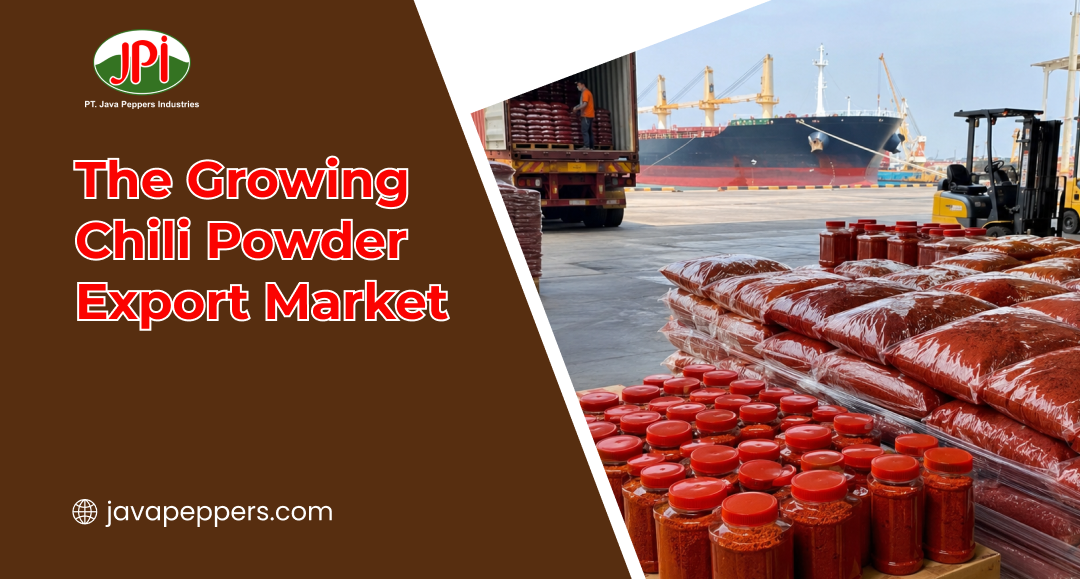
Chili Powder Export – Recent trade reports are turning heads across the spice industry. According to agriculture data, Indonesia ranks as the world’s fourth-largest chili producer today. Yet, surprisingly, local farmers still struggle to boost their chili powder export numbers on a global scale. So, what’s holding this potential back, and how can it grow further? This article dives into the trends, top markets, and tips for standing out in the world of chili powder trade.
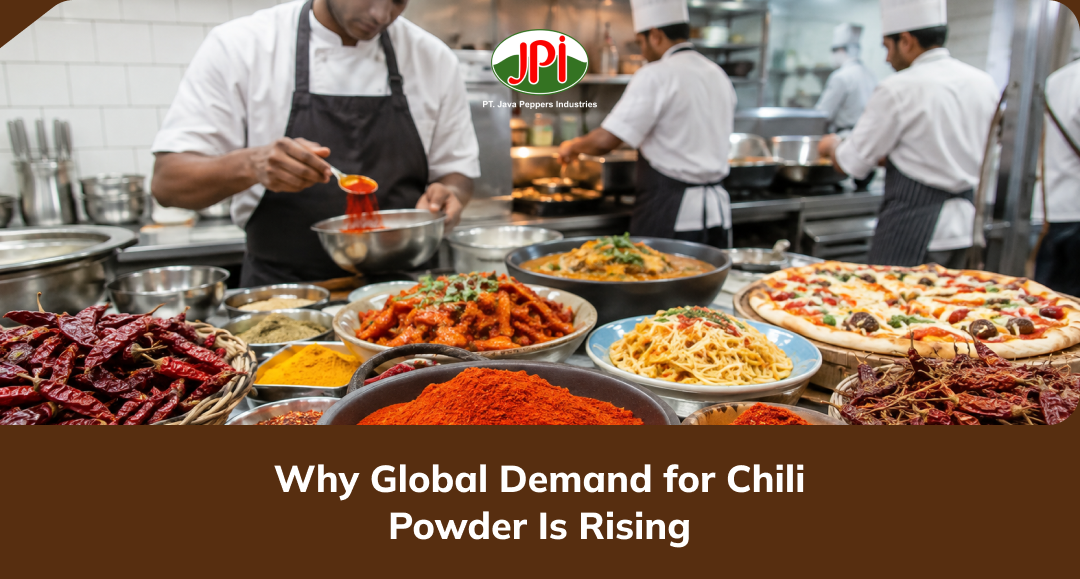
Why Global Demand for Chili Powder Is Rising
why_global_demand_for_chili_powder_is_rising
Longer Shelf Life Than Fresh Chili
Fresh chili spoils fast during long shipping routes. In contrast, chili powder stays usable for months without refrigeration. Therefore, buyers overseas prefer powder over raw pods. Consequently, demand for processed chili keeps climbing every year.
Rising Popularity of Spicy Cuisine Worldwide
Spicy food trends keep spreading across social media platforms. As a result, more countries now crave bold, fiery flavors. Meanwhile, restaurants everywhere add chili-based dishes to their menus. Thus, chili powder becomes a kitchen staple far beyond Asia.
Growth of the Processed Food Industry
Instant noodles, snacks, and sauces all rely on chili powder as a base ingredient. Additionally, manufacturers prefer powder because it blends into recipes instantly. Because of this, factories worldwide place larger bulk orders. Ultimately, this fuels steady growth in the export sector.
Health and Wellness Trends
Capsaicin, chili’s active compound, is now linked to metabolism benefits. Because of this, health-conscious consumers actively seek out spicy seasoning options. Moreover, wellness brands market chili powder as a natural flavor booster. Hence, demand grows beyond traditional culinary use alone.
Expanding E-Commerce and Global Trade Access
Online marketplaces now connect small exporters directly with overseas buyers. Therefore, farmers no longer depend solely on traditional trade routes. Additionally, digital platforms simplify documentation and shipping logistics.
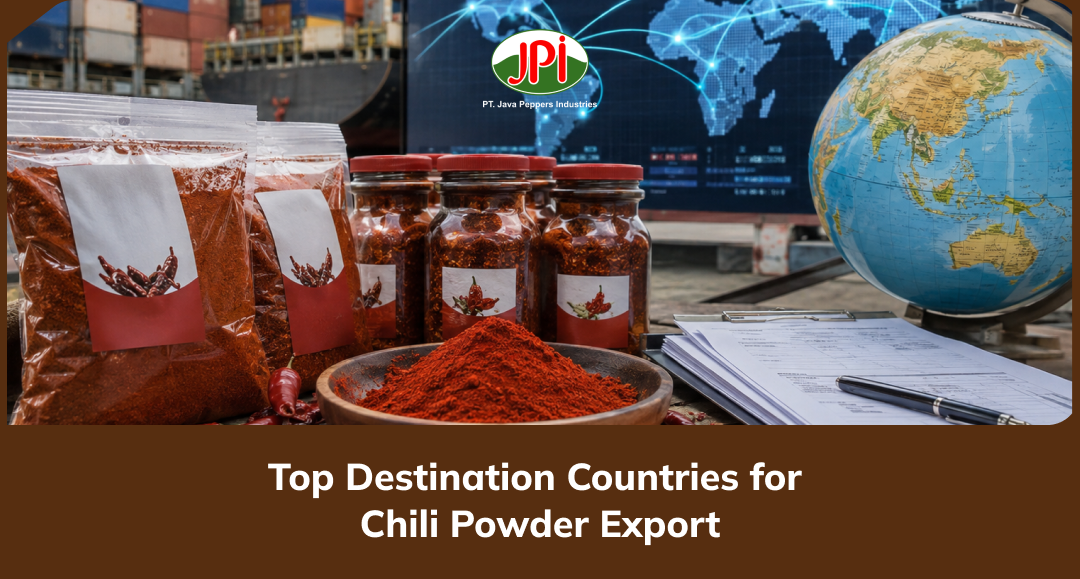
Top Destination Countries for Chili Powder Export
top_destination_countries_for_chili_powder_export
Middle Eastern Markets
Middle Eastern countries import large volumes of spicy seasoning products yearly. Specifically, nations like Saudi Arabia and the UAE show strong demand. Because of this, exporters often target these regions first. Consequently, Middle Eastern buyers remain a key pillar of chili powder export.
Southeast Asian Neighbors
Countries like Malaysia and Singapore regularly import Indonesian spice products. Since cultural taste preferences overlap, adoption happens quickly. Moreover, shorter shipping distances reduce overall logistics costs.
European Union Countries
The EU market shows growing interest in authentic Asian spices. However, strict regulations on pesticides and heavy metals apply here. Despite that, exporters who meet safety standards gain long-term contracts. Eventually, EU access builds strong brand credibility worldwide.
United States and North America
American food companies increasingly use chili powder in fusion cuisine. Meanwhile, the growing Asian food scene boosts overall product visibility. Because of this exposure, demand steadily rises across the continent. Thus, North America becomes an emerging opportunity for exporters.
Latin American Markets
Latin American countries already share a deep cultural love for spicy food. Interestingly, this overlap creates smoother market entry for new exporters. Additionally, trade agreements sometimes lower tariff barriers in the region. As a result, Latin America continues gaining traction as a destination.
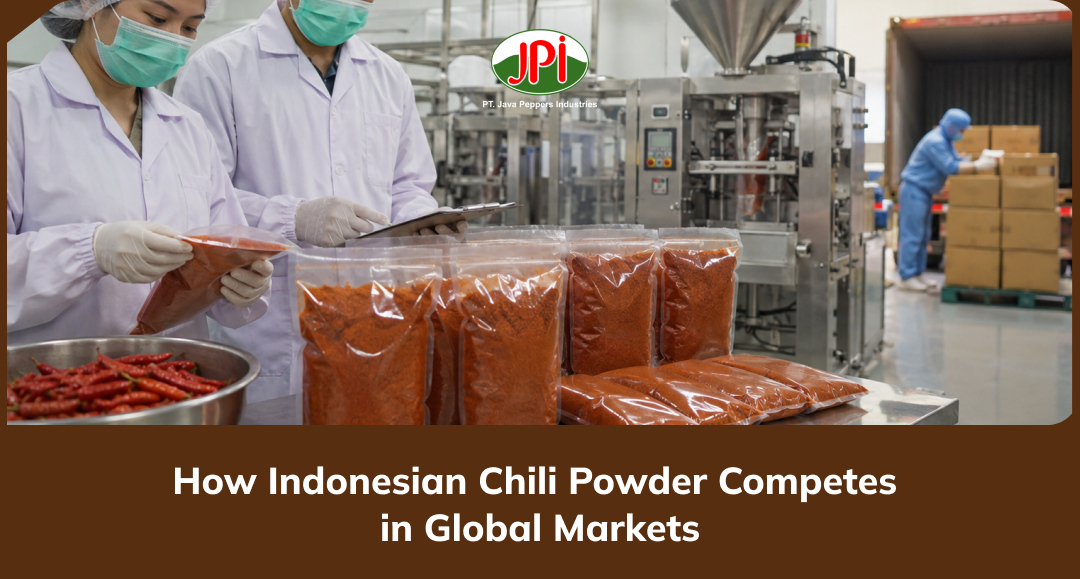
How Indonesian Chili Powder Competes in Global Markets
how_indonesian_chili_powder_competes_in_global_markets
Facing Competition from Thailand, Vietnam, and India
Indonesian chili powder often competes directly against established exporters like Thailand and India. Unfortunately, Indonesia still lags behind in international brand recognition. Nevertheless, local producers keep improving product quality steadily.
Meeting International Food Safety Standards
Global buyers demand strict certification for pesticide and contamination levels. Because of this requirement, local exporters invest more in quality control. Additionally, certification builds trust with international importers.
Solving Logistics and Shipping Challenges
Long shipping times often reduce product freshness during transit. However, powder form already minimizes this specific risk factor. Still, better port infrastructure would speed up delivery further. Therefore, logistics improvement remains a key growth priority.
Building Stronger Export Branding
Many buyers still associate premium chili powder with Thai or Indian brands. Therefore, Indonesian exporters must invest more in marketing efforts. Additionally, clear packaging and certification labels boost buyer confidence.
Leveraging Government Trade Support Programs
Indonesian trade attaches actively assist producers with export documentation. Furthermore, government programs help connect farmers to buyers overseas. Because of this support, smaller producers can now access global markets.
Read More : Easy & Delicious Stuffed Cherry Peppers Recipe
Let’s order via the button below now!

Conclusion
Overall, the chili powder export market keeps expanding worldwide year after year. Meanwhile, Indonesia holds real potential thanks to strong production capacity. However, quality standards, branding, and logistics still need improvement.