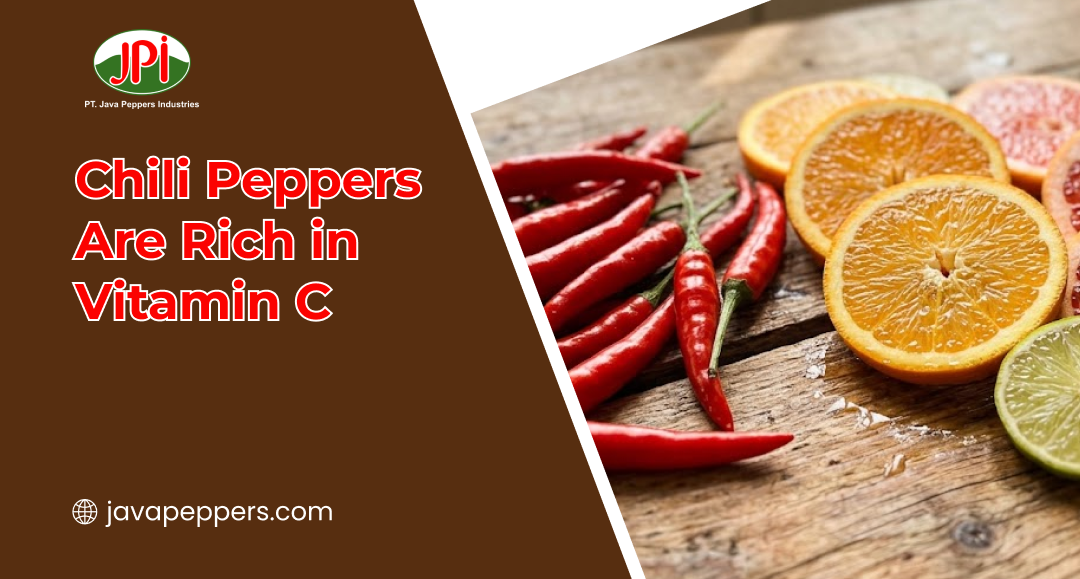
Chili and Vitamin C – Chili prices keep climbing, so many shoppers ask what they really get from every pod. Recently, Indonesia’s statistics agency reported that red chili prices rose 23.47 percent from September to Rp70,849 per kilogram. Still, chili and vitamin C make a surprisingly good pair for your money. Therefore, this guide shows how much vitamin C chili offers and how to keep it.
Some Chili Peppers Have More Than Citrus
some_chili_peppers_have_more_vitamin_c_than_citrus
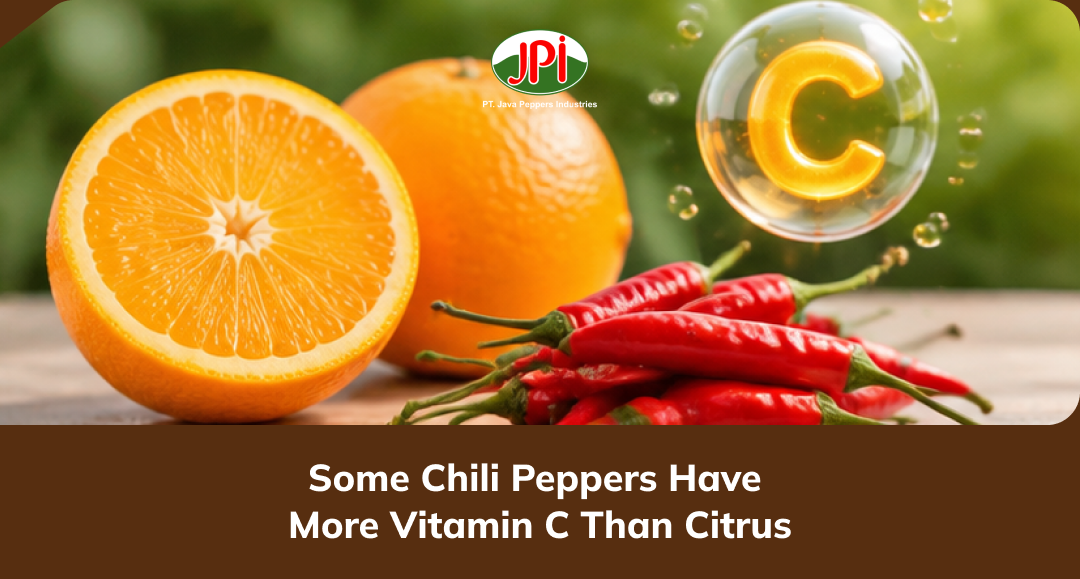
Chili peppers are surprisingly rich in vitamin C and can contain even more than oranges. Raw green hot chili contains about 242 mg of vitamin C per 100 grams, while a raw orange provides roughly 45–53 mg per 100 grams. This means chili peppers can deliver significantly more vitamin C than oranges when compared by weight. However, the exact amount depends on the variety and freshness of the chili.
Red chili peppers are also a good source of vitamin C. Raw red hot chili contains approximately 144 mg per 100 grams, which equals around 160 percent of the daily value. This amount is still much higher than the vitamin C content of citrus fruits. Therefore, both red and green chili peppers can contribute to your daily vitamin C intake.
However, most people do not eat 100 grams of chili in one sitting. A single red chili weighing about 45 grams provides roughly 65 mg of vitamin C. Meanwhile, a small 14-gram jalapeño can supply around 10 percent of the daily requirement. This means even a few chilies added to your sambal can increase your vitamin C intake.
In general, chili peppers contain around 100–240 mg of vitamin C per 100 grams. One cup of fresh green chili provides approximately 109 mg, while a medium-sized orange contains about 70 mg. However, not every chili reaches these levels because vitamin C content varies by variety and growing conditions.
Besides vitamin C, chili peppers also provide potassium and small amounts of iron. Red varieties contain more carotenoids than green ones. They are also relatively low in calories, with about 40 calories per 100 grams.
Red, Green, or Dried Chili: Which Contains the Most Vitamin C?
red_green_or_dried_chili_which_keeps_the_most_vitamin_c_
Differences Between Red and Green Chili
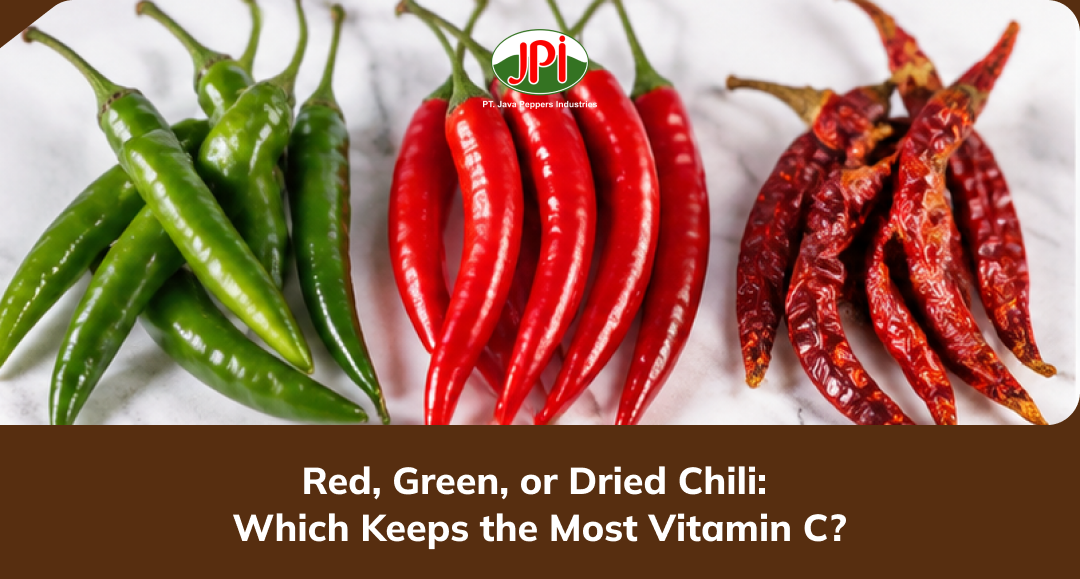
There is no single conclusion about which chili color contains the most vitamin C. USDA-based data show that green hot chili contains more vitamin C than red chili. However, other studies suggest that fully red chili peppers may contain up to twice as much. Differences in variety and growing conditions can help explain these results.
Bell peppers show a clearer pattern when it comes to color and vitamin C content. Red bell peppers contain approximately 128 mg of vitamin C per 100 grams, while green bell peppers provide around 80 mg. This suggests that ripeness can influence vitamin C levels in sweet peppers. However, the same pattern does not necessarily apply to every type of hot chili.
How Drying Affects Vitamin C
Drying can significantly reduce the vitamin C content of chili peppers. Some studies have found that dried red chili contains around 13–37 mg of vitamin C per 100 grams. Other research reports approximately 64 mg per 100 grams. Although dried chili still provides some vitamin C, its content is generally lower than that of fresh chili.
The drying method also affects how much vitamin C remains. One study found that vacuum drying at 55°C preserved vitamin C more effectively. In contrast, higher drying temperatures caused greater vitamin C losses. Therefore, low-temperature drying is generally better for retaining this nutrient.
How to Preserve Vitamin C When Cooking Chili
Heat and water exposure during cooking can reduce vitamin C levels. To preserve more nutrients, add fresh chili near the end of the cooking process. Fresh chili should also be stored in the refrigerator and used within a few days to maintain its quality.
Raw sambal is another option because it does not require prolonged cooking. However, proper ingredient handling and storage are still important. If you want to retain more vitamin C, choose fresh chili and avoid cooking it for too long.
Chili Peppers and Immunity: What Vitamin C Really Does for Your Body
Supporting the Immune System
Vitamin C helps different immune cells function properly. It also acts as an antioxidant, protecting cells from damage caused by free radicals. However, eating chili peppers does not make your body immune to illness. Vitamin C is simply one part of a healthy lifestyle.
Supporting Collagen Production
Your body needs vitamin C to produce collagen. This protein helps maintain healthy skin and gums while supporting wound healing. A lack of vitamin C can interfere with the body’s healing process. That is why regular vitamin C intake is more important than consuming large amounts occasionally.
Improving Iron Absorption
Vitamin C also helps your body absorb iron from plant-based foods. For example, you can combine chili peppers with beans or leafy greens to support iron absorption. Chili peppers themselves contain small amounts of iron, although they are not a major source. Combining different nutritious ingredients can help support your daily nutritional needs.
Vitamin C Cannot Prevent Every Illness
Although vitamin C supports immune function, it cannot prevent every illness, including the common cold. Some research suggests that regular vitamin C intake may slightly shorten the duration of a cold. However, it is not a cure for illness.
Read More : Exploring Different Chili Flavor Profiles
Let’s order via the button below now!

Conclusion
Fresh chili peppers can contain more vitamin C than oranges when compared gram for gram. However, their vitamin C content varies depending on the variety, ripeness, and processing method. Drying and prolonged cooking can reduce this nutrient, making fresh chili a good option when possible.