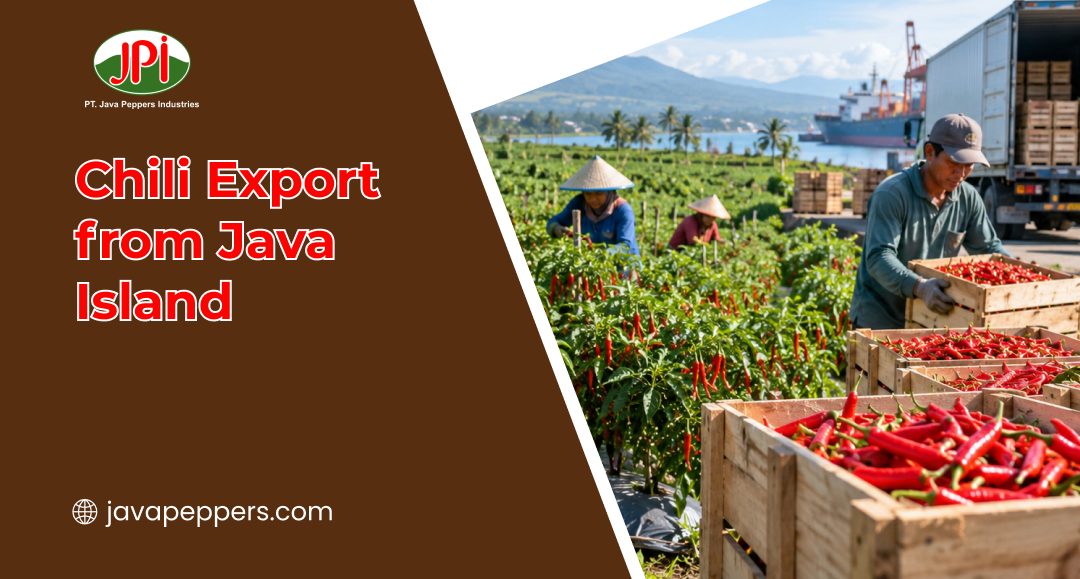
Chili Export from Java – Java grows a huge share of Indonesia’s chili. Farms in East, Central, and West Java harvest tons every week. Yet many farmers and traders still ask the same thing. Can we sell this chili overseas, and how? Chili export from Java is possible, and demand abroad keeps growing. This guide explains the process in plain words. You will see which chili products sell, which documents you need, and how to avoid common mistakes.
Why Java Island Is a Key Hub for Chili Export
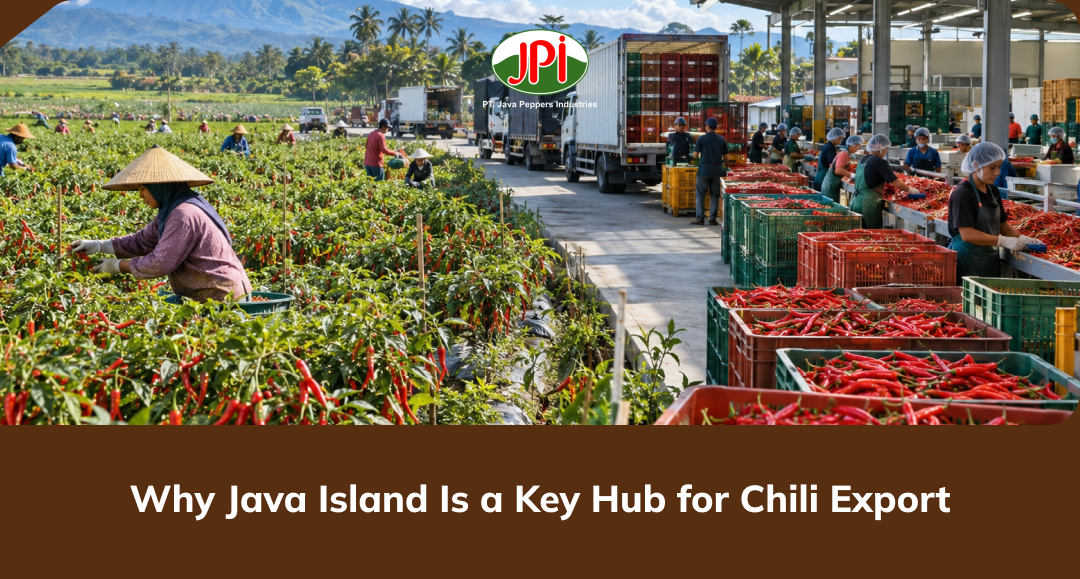
Java boasts rich volcanic soil that fuels exceptional crop yields year-round. Moreover, local agricultural hubs continuously supply massive quantities of premium produce. Consequently, international buyers actively seek fresh agricultural products from this region. Therefore, the chili export from java ecosystem benefits immensely from these fertile growing conditions.
Modern transportation networks across Java streamline domestic and international logistics seamlessly. Additionally, highway systems connect inland farming villages directly to major sea ports. Furthermore, specialized cold-chain logistics protect fresh harvests from premature spoilage effectively. Hence, the chili export from java network maintains high product quality during long transit times.
Government agencies actively support local agricultural producers through modern farming infrastructure initiatives. Besides, official programs provide technical training to enhance harvest volumes significantly. Likewise, trade partnerships help local agricultural enterprises expand their commercial reach globally. Thus, the chili export from java sector gains vital backing to scale international operations efficiently.
Global consumers increasingly demand authentic tropical spices for diverse culinary applications. Moreover, food processing companies worldwide require consistent bulk supplies of high-grade chili. Furthermore, overseas markets appreciate the distinctive heat profile offered by Indonesian peppers. Indeed, the chili export from java business answers this rising international demand effectively.
Top Chili Varieties from Java That Are Exported Globally
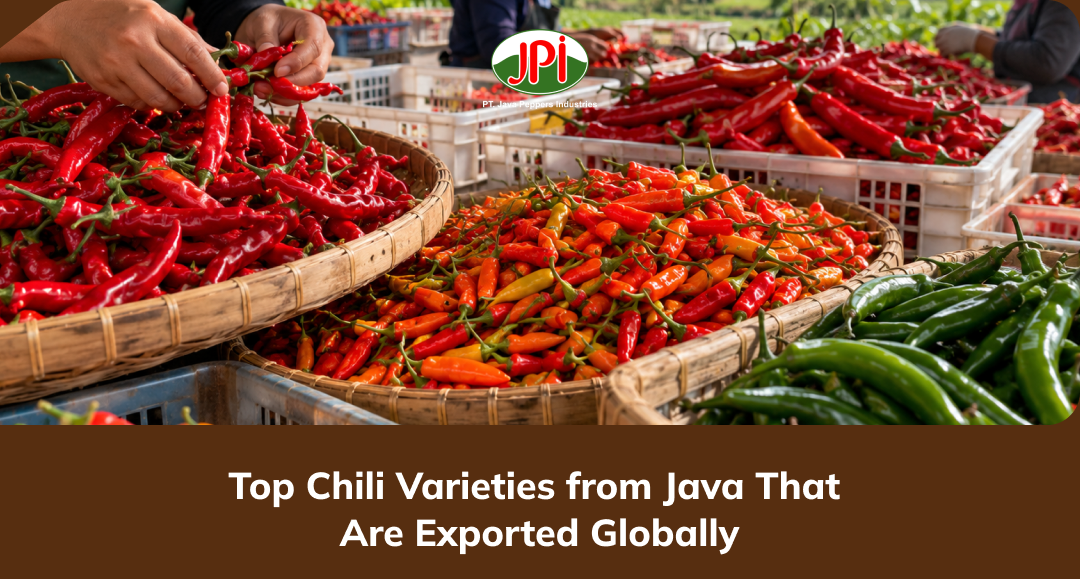
Which chili products sell best abroad, becausen not every chili travels well. Here is how the main forms compare.
Fresh Chili
Fresh chili is the hardest to ship. It spoils fast, so you need cold storage and quick transport. A fresh batch might last only one to two weeks in good chilled conditions. That is a tight window for sea freight. Air freight works better, but it costs more.
Dried Chili and Chili Flakes
Dried chili is the safer starting point. It stores for months and weighs less. Importers also like it because they can grind it, blend it, or use it in sauces. However, moisture control matters here. Damp chili can grow mold and fail inspection.
Chili Powder, Paste, and Frozen Chili
Processed forms add value. Powder and paste fit food factories and restaurants. Frozen chili keeps its color and flavor without heavy preservatives. These products usually bring better margins than raw chili.
Tips for Java Chili Farmers to Break Into Export Markets
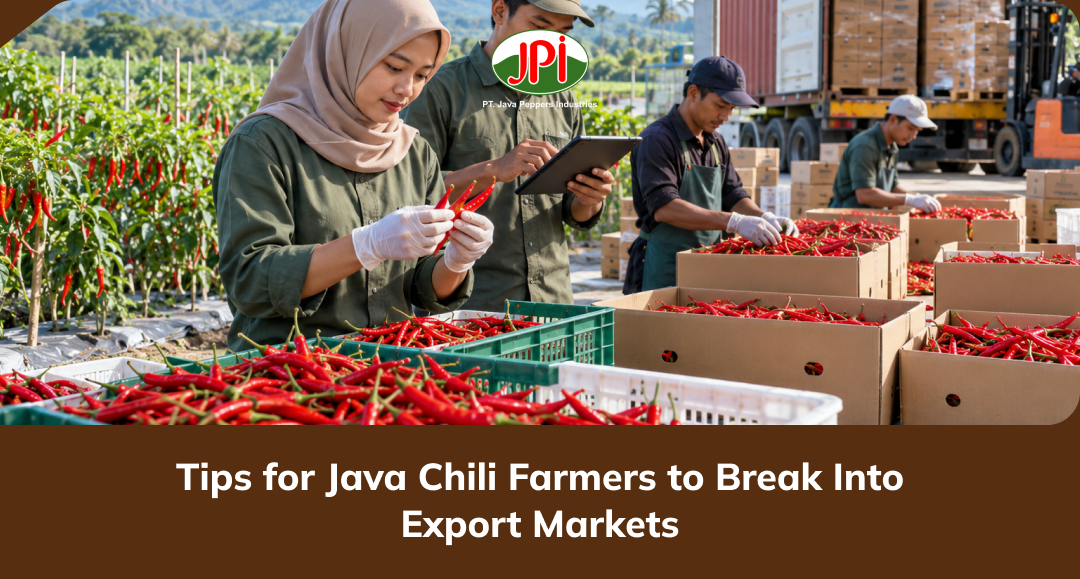
Farmers must adopt strict agricultural practices to satisfy demanding international food safety protocols. Additionally, reducing synthetic chemical pesticides ensures compliance with rigorous export standards. Furthermore, obtaining official organic certifications opens lucrative premium markets overseas quickly. Consequently, the chili export from java supply network raises product standards to compete internationally.
Building strategic partnerships with accredited international trading agencies expands commercial market access. Additionally, export agencies simplify complex customs clearance procedures for local farming groups. Furthermore, direct contracts protect local growers from extreme domestic market price fluctuations. Thus, the chili export from java channel provides stable long-term income for dedicated farming communities.
Implementing climate-controlled storage solutions protects delicate crop yields right after harvest time. Besides, maintaining low temperatures keeps peppers fresh until final export packaging occurs. Moreover, proper humidity management prevents dehydration and preserves essential fiery oils. Hence, the chili export from java trade maintains peak product quality from farm gate to international destination.
Read More : How to Test Chili Heat Levels
Let’s order via the button below now!

Conclusion
Chili export from Java is a real opportunity, but it rewards preparation. Choose a product that suits your logistics, such as dried chili or processed forms. Follow the quarantine and customs steps, and meet the buyer’s quality rules. Finally, work with a supplier you can trust.