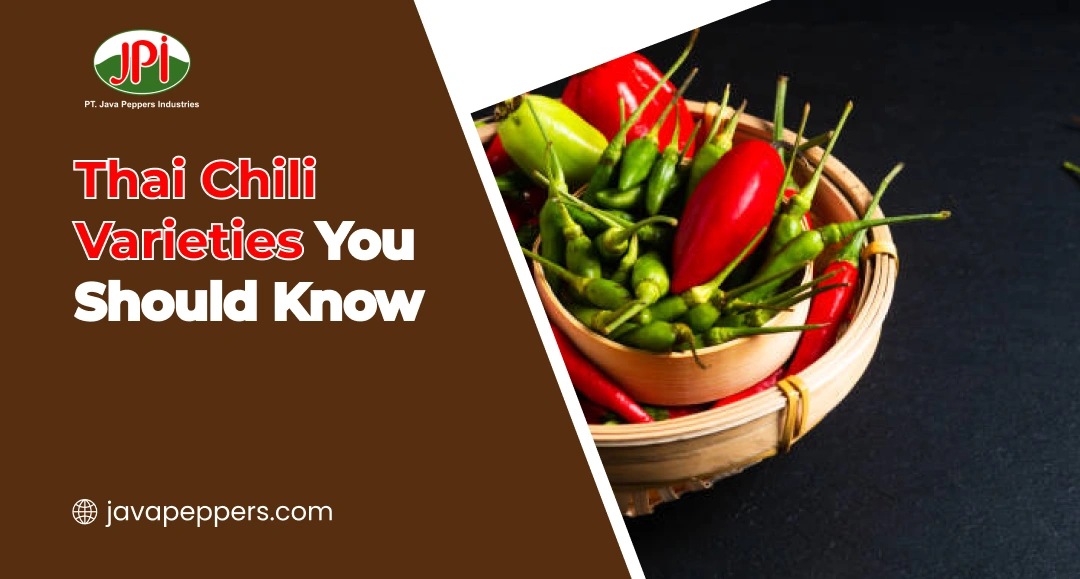
Thai Chili Varieties – When people think about Thai cuisine, one of the first things that comes to mind is its bold and spicy flavor. Behind that signature heat are different Thai Chili Varieties that play an important role in shaping the taste of Thailand’s famous dishes.
These chilies are not just about spiciness—they bring aroma, color, and depth to food. Whether you are a home cook, a food lover, or simply curious about Southeast Asian ingredients, understanding Thai chilies can help you appreciate Thai food on a whole new level.
In this article, we will explore the most popular Thai chili varieties, how they are used in traditional dishes, and how they differ from Indonesian chilies. Let’s dive into the world of Thai chilies and discover why they are so special.
Thai Chili Varieties
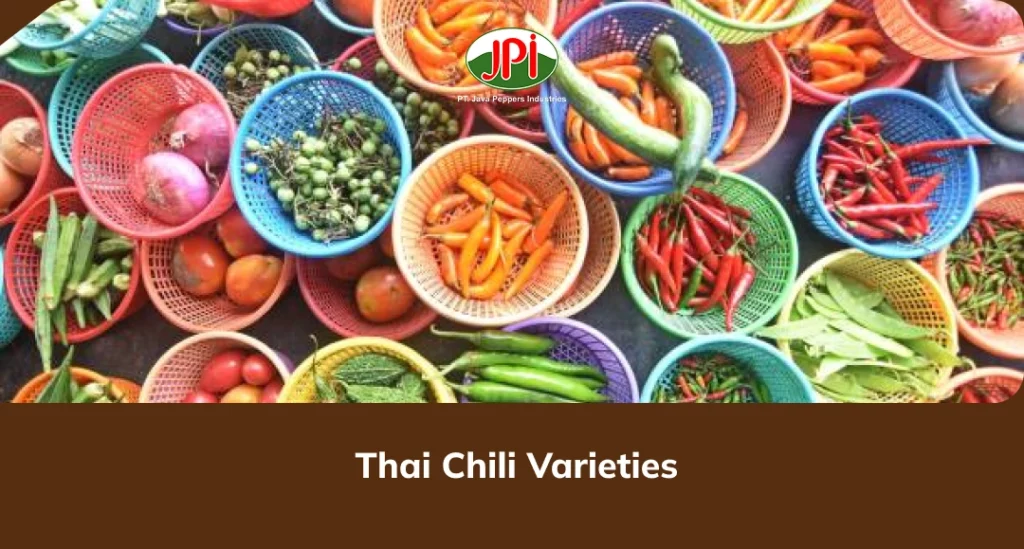
Thailand is home to several chili types, each with its own flavor profile, heat level, and culinary use.
Here are some of the most well-known Thai Chili Varieties you should know:
1. Thai Bird’s Eye Chili (Prik Kee Noo)
This is the most famous Thai chili and one of the spiciest. Small in size but extremely powerful, Bird’s Eye chilies can range between 50,000 to 100,000 Scoville Heat Units (SHU). They are commonly green or red and are used fresh, dried, or crushed. Despite their intense heat, they also have a clean, sharp flavor that enhances dishes rather than overpowering them.
2. Prik Chee Fah (Thai Spur Chili)
Longer and milder than Bird’s Eye chilies, Prik Chee Fah is often red and slightly sweet. This chili is popular in stir-fried dishes and chili pastes because it adds color and mild heat without being overwhelming. It is a great choice for people who enjoy flavor more than extreme spiciness.
3. Prik Yuak (Thai Banana Chili)
This chili is large, mild, and often used for stuffing or slicing into dishes for texture. Prik Yuak provides very little heat but adds a fresh, vegetable-like taste. It is commonly found in soups and stir-fries where balance is important.
4. Dried Thai Chilies
Dried versions of Thai chilies are widely used in Thai kitchens. Drying intensifies their flavor and adds a smoky note. These chilies are often ground into flakes or soaked and blended into curry pastes.
Each of these Thai chili varieties serves a specific purpose, proving that Thai cooking is not just about heat, but harmony.
How Thai Chilies Are Used in Traditional Dishes
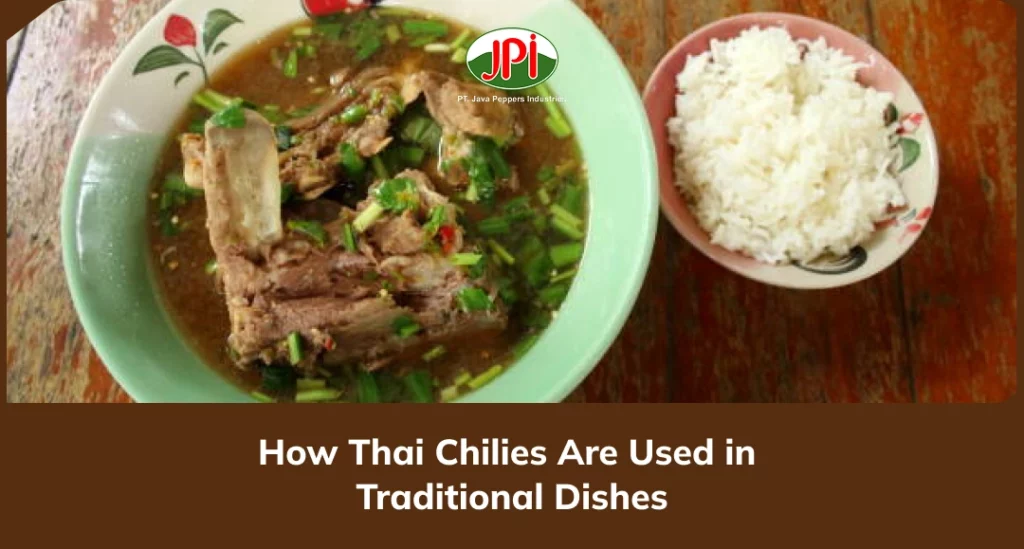
Thai cuisine is known for its balance of spicy, sour, sweet, salty, and bitter flavors. Thai chilies play a key role in achieving this balance.
In dishes like Tom Yum, Bird’s Eye chilies are crushed to release their heat into the broth, creating a spicy and refreshing soup. For Som Tam (green papaya salad), fresh chilies are pounded with garlic and lime juice, delivering a sharp and vibrant spiciness that wakes up the palate.
Curry pastes such as red curry and green curry rely heavily on dried and fresh Thai chilies. The chilies are blended with herbs and spices to create a rich base that defines the character of the dish. Without the right chili variety, the curry would lose its authentic taste.
Stir-fried dishes like Pad Kra Pao use Thai Bird’s Eye chilies to create a spicy kick that pairs perfectly with basil and savory sauces. Even simple condiments like nam prik (Thai chili dips) showcase how chilies can be the star of the meal.
The beauty of Thai chilies lies in their versatility. They can be used whole, chopped, crushed, dried, or blended, depending on the desired flavor and heat level.
The Difference Between Thai Chilies and Indonesian Chilies
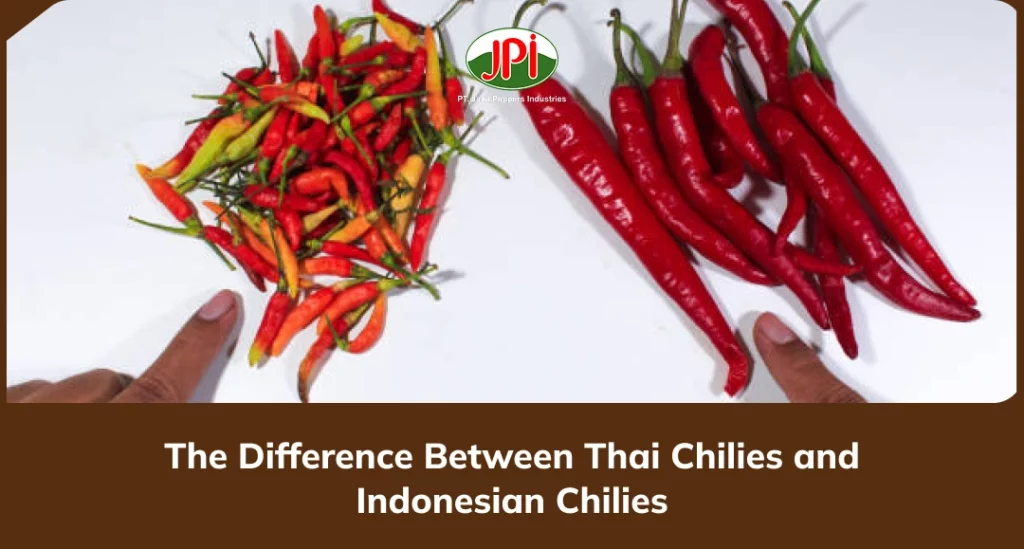
While Thai and Indonesian cuisines both love spicy food, there are clear differences between Thai chilies and Indonesian chilies.
Thai chilies, especially Bird’s Eye chilies, are generally smaller but much hotter. Their heat is sharp and immediate, making them ideal for quick-cooking dishes and fresh applications. They also tend to have a cleaner, brighter flavor.
Indonesian chilies, such as cabai merah and cabai rawit, vary widely in size and heat. Many Indonesian chilies have a deeper, slightly sweeter taste and are often cooked longer in oil to develop richness. Indonesian sambals usually rely on slow cooking, which gives the chilies a more complex and mellow heat.
Another difference is usage. Thai cuisine often uses chilies fresh to highlight natural heat, while Indonesian cooking frequently involves frying or roasting chilies to enhance aroma and depth.
Understanding these differences can help cooks choose the right chili for the right dish, especially when experimenting with Southeast Asian recipes.
Let’s order via the button below now!

Conclusion
Thai chilies are more than just spicy ingredients—they are essential elements that define Thai cuisine. By learning about different Thai Chili Varieties, how they are used in traditional dishes, and how they compare to Indonesian chilies, you gain a deeper appreciation for Thai food culture.
If you enjoy bold flavors and love exploring new ingredients, Thai chilies are definitely worth knowing. With the right knowledge, you can bring authentic Thai heat and flavor into your own kitchen and experience the true essence of Thai cooking.